Day 4: The Woman with the issue of Blood and Katara
Therefore, put on the complete armor of God, so that you will be able to [successfully] resist and stand your ground in the evil day [of danger], and having done everything [that the crisis demands], to stand firm [in your place, fully prepared, immovable, victorious].
Ephesians 6:13 AMP
Scriptures: Ephesians 6:13; Matthew 9:22; Mark 5:28-30; Luke 8:46-48; James 1:2-4
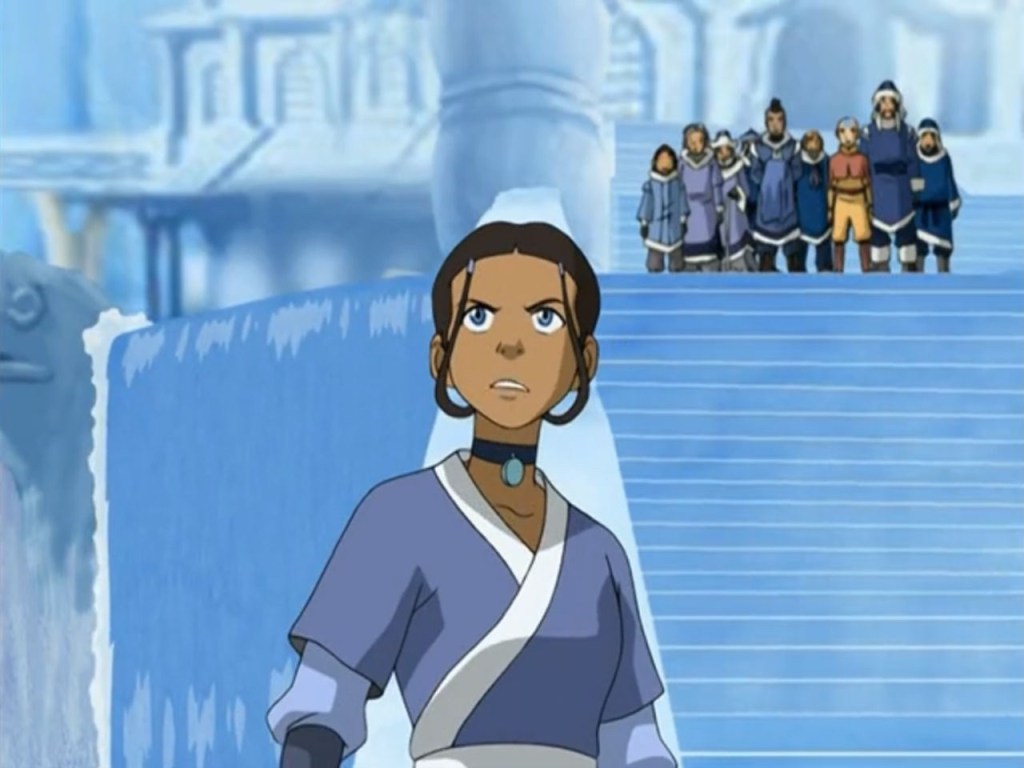
Standing is hard. It is so hard that Ephesians 6:13 mentions it twice. It takes effort and will. To stay standing, to keep going, must be a choice that a warrior not only makes but takes responsibility for.
The woman with the issue of blood in the New Testament is not named, but she is in three of the Gospels and is called Daughter. She shows us that choosing something is just one part. As the disciples point out, many people were around and chose to touch Jesus. But something was different about the woman’s touch. For not only did she choose to go and push her way till she touched the hem of Jesus’s clothes, she believed that was enough. Then, she stood before Jesus and admitted what she did. She took responsibility and stood up for her choice to keep going, to believe.
Another woman, well girl, who had to do this was Katara in her fight against Master Pakku. In the fight, Katara freezes her feet to keep herself steady, to keep herself standing. She’s not trying to win. Pakku has studied water-bending (martial arts with the control of water) longer than she has been alive and she is self taught. But she has chosen to stand against this belief that she cannot be trained by him. So she challenges him, not to prove herself to him, but to show that she is not letting herself, letting her beliefs get beaten down.
These women, Katara and the woman with the issue of blood, had beliefs that were worth standing for. They were worth the effort to persevere the fear, the hardship, the embarrassment, the doubt, the people opposing them, or whatever else could shake them. Not only were their beliefs worth their perseverance, they stood and took accountability for what they did. They stood for what they believed.
Katara did not back down from the fight even when Pakku praised her. The woman with the issue of blood admitted to Jesus it was her who touched him. And then, their standing paid off. The woman gets called Daughter and is told by Jesus that by her faith, she is healed. During the fight, Pakku recognizes that he cannot beat Katara down so he encases her in ice, but sees a reminder of the past, echoing his present, and decides to do things differently. He relents his beliefs and trains Katara.
If we are choosing to be a warrior, we are choosing to stand, especially if we are God’s warriors. Not because God needs warriors to stand up for Him. He’s God, He can and will prove Himself. He will even help hold us up (if we ask).
Being a warrior, being God’s warrior, is about what belief you are choosing to stand in. Just like the woman and Katara, their standing was more than just a choice. Standing was a representation of their faith. Standing is not about fighting. It is about believing and acting on that belief.
We say we believe God already won the battle. Yet we let ourselves get beaten down by cynicism, worry, anger, fear, pride, or whatever else we let be bigger than God’s victory. Though we say nothing is bigger than our God. No matter what we say we will be held accountable for actions. For what we stood or fell for. Let us be held to what we stand for.

